



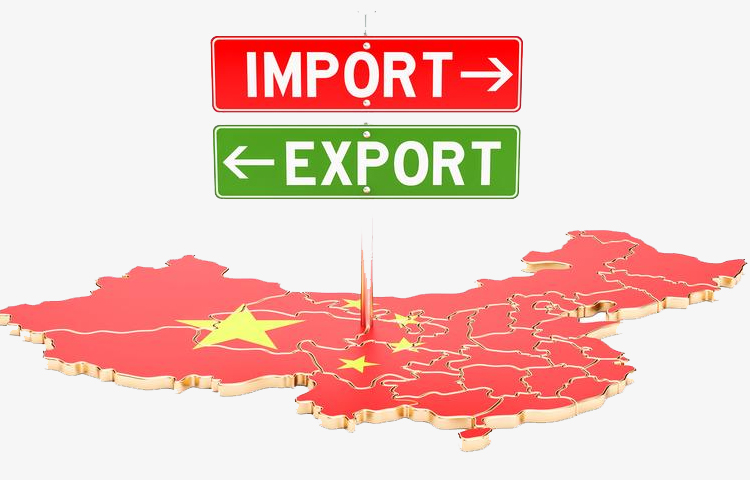
How China is growing as an export market?
Policy makers are currently during a conundrum over how best to have interaction economically with China. Underlying much of the controversy is that the assumption that China may be a huge and rapidly growing market. While that has historically been true, the falling import intensity of China’s economic process suggests a more limited market than foreign exporters assume. China’s economy has grown rapidly since its WTO accession in 2001, compounding at 14% annually in nominal USD terms, the measure that's perhaps most relevant to trade and investment flows. While Purchasing Power Parity (PPP) adjustments have their uses, for instance in measuring poverty, trade and investment are transacted at market exchange rates and so GDP at market exchange rates is that the most pertinent measure of potential. At US$14.3 trillion in 2019 (the last pre-COVID 19 year), China was still about 33% behind the u. s. at US$21.4 trillion (1).
One remarkable feature of China’s ascent has been the bifurcation within the structure of growth on either side of the world Financial Crisis. At the time of China’s accession to WTO, exchange goods and services was just 38% of GDP but rose dramatically to 65% of GDP by 2006. Since then, it's declined back to 36% of GDP, making China more autarkical now than it absolutely was before WTO accession. As this ratio implies, both export and import growth have lagged GDP growth substantially post 2006. In the five years running up to accession to WTO, China’s imports grew at a 12% compound annual rate of growth (CAGR). within the first five years following accession, they grew at a 26% CAGR, but within the last five years through to 2019, they need grown at just a 2% CAGR in nominal dollar terms. This dramatic slowdown in import growth has taken place despite a rapid rise in China’s real effective rate of exchange, which all else being equal, one would expect to stimulate Chinese demand for foreign made goods. Five possible or partial explanations for this trend are:
A substantial a part of China’s import demand was for re-export. It consisted of components and raw materials for processing. As export growth has slowed, so too has import growth. China’s industrial policy has been geared toward import substitution: increasing the proportion of domestic value-added in exports, and self-sufficiency in higher end products that were previously imported. Many American and European multinational companies (MNCs) that previously entertained ambitions to export to China have instead invested inside China adopting a “made in China purchasable in China” model driven partially by the high non-tariff barriers they face to accessing the China market from abroad. this implies the value-added takes place in China, the roles are in China, and therefore the MNCs take the profits through the income account of the balance of payments, rather than through the trade account. With the profit, of course, comes the operational risk of doing business in China. The China market is maybe not growing as fast in aggregate because the headline numbers suggest, with GDP growth potentially having been exaggerated. The China market remains a “hard nut to crack” for both cultural and policy reasons (high tariff and non-tariff barriers). The combined impact of those factors is that the import intensity of China’s growth has declined remarkably over the past decade more or less. within the five years running up to WTO accession the US$475 billion dollars of GDP expansion was in the course of US$106 billion all important growth (a ratio of 22%). Import intensity peaked in 2004 at 45%. In sharp contrast, China’s economy expanded by US$3,867 billion within the five years to 2019, and yet imports grew by just US$235 billion, an import intensity of just 6%. There are a minimum of two other factors for policy makers to think about in accessing the attractiveness and potential of China as an export destination: the structure of its imports and also the likely future growth of GDP (and hence the potential for expansion whether or not import intensity remains low.) At US$2.5 trillion, China is that the second largest importer of products and services after the us at US$3.1 trillion. However, in accessing a country’s ability to access the market, it's important to notice two factors. a substantial portion of China’s imports remain to be used within the processing trade. In 2020, using customs data, this accounted for just over 20% of merchandized imports or US$400 billion. a rustic or company is either geared into the world value chain (GVC) or not, and breaking in is difficult. Japan, Korea, and Taiwan are the most important players in supplying components for processing in China. Furthermore, this GVC business is potentially liable to geo-economic attempts to relocate manufacturing, a minimum of at the margin, aloof from China. Secondly, an outsized proportion of Chinese imports are essential inputs into the domestic economy that China is lacking at home: top quality ore and hydrocarbons, for instance. These minerals accounted for an additional US$450 billion of China’s imports in 2020. Again, a possible exporter to China is either endowed a surplus of food, ores, and oil or not. Australia, Brazil, and Angola have all done stream of this trade. For those countries not intrinsically intertwined within the North Asian value chain and not endowed an far more than ores and oil, the export opportunity set is therefore much reduced – closer to US$1.6 trillion instead of US$2.5 trillion. These imports could be thought of as consisting of “retained discretionary imports.” The future of China’s GDP growth trajectory is, of course, unknown. However, it's evident from the demographic structure of China, that over the following twenty years, China’s working-age population will shrink by about 15%-20%. it's also possible that, given the very high level of current overall participation within the manpower, an aging population would force some workers to drop-out to appear after elderly members of the family. Demographics therefore pose a sever challenge to future growth because the absolute level of employment will shrink considerably. additionally, China’s capital stock has grown at a faster pace than the economy, and China’s capital stock growth is now slowing from a bloated level. A slower rate of capital formation and a shrinking workforce suggest that within the absence of an enormous improvement in total factor productivity, China’s economic process will become very pedestrian within the coming years: 2% real growth may perhaps be an honest outcome. Furthermore, with a true effective rate of exchange that has appreciated 94% since January 1994, nominal dollar growth is also even below the important growth. Policy makers are currently in a very conundrum over how best to interact economically with China. Underlying much of the controversy is that the assumption that China may be a huge and rapidly growing market. While that has historically been true, the fact of the export opportunity for many countries is much smaller than the headlines suggest, and therefore the future growth prospects are by no means assured. Lower future growth and low import intensity should perhaps moderate policy makers’ enthusiasm for compromising on problems with national security and values when trying to reach an acceptable policy for economic engagement with China. (1) All economic data comes from the planet Bank open database.
Thank you for your time .
Global Gate Investments®